
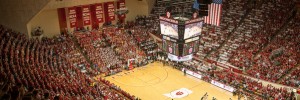
One by one on Thursday afternoon they spoke, smiles abundant. It was a joyous day on the floor of Assembly Hall and one that will change the course of history for the building. In a 25-minute ceremony that included speeches ...
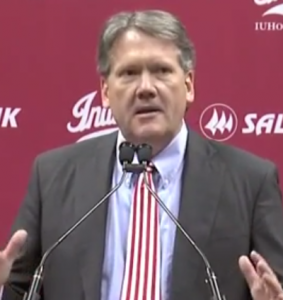
Indiana announced a $40 million donation from Cindy Simon Skjodt earlier today that will result in major renovations and a new name for Assembly Hall — Simon Skjodt Assembly Hall. Watch the announcement of the gift below from Michael McRobbie ...
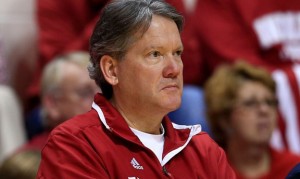
Indiana athletics director Fred Glass met with the media on Thursday afternoon to discuss $40 million in renovations coming to Assembly Hall that will be completed by 2016. Watch the press conference in the media player below:
Update: Per a pair of tweets from Bob Kravitz, Assembly Hall will be renamed Simon Skjodt Assembly Hall in 2016 after $40 million in renovations to the building are complete. — Indiana University president Michael McRobbie will make a “major ...
In our recent conversation with Fred Glass, we covered a variety of topics. Among them: Big Ten expansion, student ticket sales and the future of Assembly Hall. Also discussed in that conversation were Indiana and Purdue only playing once this year in basketball, guarantee games and the absence of a marquee non-conference home game and returning to a "golden era" of athletics at Indiana. Here are the athletic director's thoughts on both of those topics, in Q & A format: Inside the Hall: We talked to you about this at Huber Winery over the summer at the Tailgate Tour and it was kind of a hot topic at the time because a couple weeks before that, it was announced that Indiana and Purdue would only play once this year in basketball. I know at that time you said you'd be in favor of a protected rivalry where the schools would play twice every year. What would be the process as far as getting something like that done? In football, there's something like that, but what would the process to be able to do something like that look like and is that something you're actively engaged in dialogue on?
In a recent conversation with Indiana basketball coach Tom Crean, Fred Glass reminisced to his first year as IU's athletic director. Crean was in the midst of his first season as IU's head coach in 2008-2009, and the team was on its way to its worst record in school history. Student season tickets sales were so poor, just more than half of its allotted space of 7,800 seats had been filled. "Shoot, we were doing everything we could. I can't remember the exact number that first year, I think we ended up with 4,200 or something like that," Glass said in a recent interview with Inside the Hall. "Which at any other university in the country would be the best year they've ever had, but for us, was extremely disappointing." For the next three seasons, students who bought season tickets would have access to every home game. But as Indiana's on-court success returned, demand grew as well. Last season, with a preseason No. 1 team, students were given access to only 10 games each. However, heading into this season with far-fewer on-court expectations, demand is up. Around 15,000 student season ticket sales have been sold, and students who bought season tickets were given eight games — only half of the amount they had received only two years ago.
Conference expansion and realignment have changed college athletics significantly. And whether you are a fan of what has taken place or oppose the breakdown in tradition brought about by these changes, the Big Ten has been ahead of the curve. With the conference reportedly paying out close to $26 million to each member institution in the last fiscal year, including $7.6 million from the Big Ten Network, it's not hard to see why schools like Nebraska, Maryland and Rutgers opted to leave their respective leagues to join. The Big Ten is distributing the most money of any conference to its members and with the growth of BTN and network TV contracts, the numbers should only continue to grow.
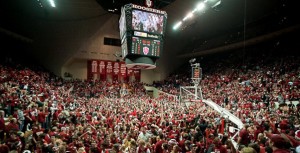
Fred Glass knows how the script goes. From growing up in the Indianapolis area, to now as Indiana's athletics director, Glass would watch the same scene play out over and over, year after year: Opponents would enter Assembly Hall optimistic, maybe even confident, and then after looking up at the wall of 17,400-plus fans clad in cream and crimson "going absolutely crazy," they cringe. They unravel. In a world of college basketball that has become increasingly known for its games being played in multi-purpose arenas, Indiana's Assembly Hall is becoming the anomaly. Since the 1971-1972 season, the building has been home to three national champions. The tradition, the history, even the angle of the building's seating in relation to the court, is exactly what makes Assembly Hall different from any other college basketball venue. And for Glass, being far from the norm is exactly what he wants. "When the lights come on, Gus Johnson doesn’t need to say you’re in Assembly Hall," Glass told Inside the Hall in an interview in his office at Memorial Stadium earlier this week. "You know you’re in Assembly Hall." But for a building that has been around for more than 40 years, it has flaws. The steps are at different lengths. Not all the seating is considered "premier." A segment of fans want the building torn down and replaced with a new, state-of-the-art arena. That's not happening, Glass said. But he is quick to admit Assembly Hall needs renovations, especially to make it more "fan-friendly." He is ready to lead that effort.
Welcome to offseason storylines, a look into some of the biggest storylines surrounding the 2013-2014 Indiana Hoosiers. Next up, we tackle this question: What will expectations for next season’s team look like? When Tom Crean took the Indiana job in ...
Ever since Indiana’s talks about continuing a series with Kentucky broke down, athletics director Fred Glass and Tom Crean have been working to find another marquee non-conference opponent. Glass and Crean may have finally found one, though not for this ...
Update: A previous edition of this story said Indiana had sold 15,500 student season tickets for the 2013-14 season. Fred Glass gave us that number on Tuesday night, but after checking the records, indicated later that the number is actually ...
Indiana Athletics Director Fred Glass and basketball coach Tom Crean have been working for some time to find a marquee non-conference opponent to replace Kentucky. Many schools have been mentioned in recent months — including Kansas, Louisville and Gonzaga — ...
Indiana Athletics announced dates and times for the 2013 Tailgate Tour on Monday. Here’s the complete release from IU media relations: (Note: Tom Crean is scheduled to appear in Jasper, Indianapolis and Starlight.) BLOOMINGTON, Ind. — The IU Varsity Club ...
When Indiana lost in last Thursday’s Sweet Sixteen game against Syracuse, the naysayers came back out in full force. Many commenters and some national voices criticized the way IU’s season ended after the Hoosiers failed to advance farther than a ...
In a little over four years, Fred Glass has seen Indiana’s basketball program rise from the lowest of lows to atop the polls. Are they back all the way? No. But if you ask Glass, they’re “darn close.” Podcast on ...
There has been some speculation in recent weeks that a number of college programs, including Indiana, may occasionally wear alternate jerseys with sleeves provided by Adidas. The NBA’s Golden State Warriors will be the first to wear the new uniforms ...